2026/02/24 11:06
**1000 年頃の英語を読む**
RSS: https://news.ycombinator.com/rss
要約▶
Japanese Translation:
記事は、オールド・イングリッシュが多くの人々が考えるほど現代読者にとって疎外的でないことを主張し、わずかな努力で理解できると述べている。
これは「英語をどれくらい昔まで理解できますか?」というタイトルのバイラルなソーシャルメディア投稿に応じており、著者は専門家ではないものの、時折調べながら1000 ADまで快適に読むことができると指摘している。
その例として、オールド・イングリッシュの抜粋を段階的な近代化とともに提示している:まず文字変換(例:þ → th、g/c → y/ch/sh/wh/ght、ハイフン除去)、次に明らかな語源対応(heo → she、ich → I、wifeman → woman)を置き換え、最後に句を現代英語へ変換する。近代化された抜粋(「And what she said was all true…」)は、このプロセス後にテキストが自然に読めることを示している。
著者はまた、「fixas」、「wer」、「were」といったまだ不明瞭な語を列挙し、別途学習が必要なオールド・イングリッシュの残存要素(否定一致粒子「ne」、接頭辞「for‑þy‑þe」、動詞「sindon」、前置詞「mid」、単語「fuglas」や「stedes」など)を強調している。
主要な結論は、オールド・イングリッシュには独自の文法があるものの、多くの人が想像するよりも現代英語に実質的に近いということである。アクセス性の向上は、教育者、言語学者、愛好家にとって初期英文学をより扱いやすくし、カリキュラム設計や中世テキストの翻訳・注釈を行うデジタルヒューマニティズプロジェクトに影響を与える可能性がある。
本文
2026年2月24日
「英語を何世紀前まで理解できますか?」という投稿がバイラル化し、2000 AD(西暦2000年)から1000 AD(西暦1000年)の英語へと時系列で語りを展開することで、多くの人々が古い形態の英語に興味を持つようになりました。
読者からよく聞かれる感想は、1200 AD以降の言語は「外国語で理解不能だ」というものです。私自身はこうは思いません。古英語は確かに学習にはある程度の労力を要しますが、少し分析すれば現代英語よりもずっと近く、しかも現代ドイツ語よりも遥かに近いと感じます。
完全な免責事項: 私は古英語の専門家でも言語学者でもありません。1000 ADまで比較的楽に読め、要旨を掴むことができましたが、意味を把握するために数語を調べる必要もありました。
原文
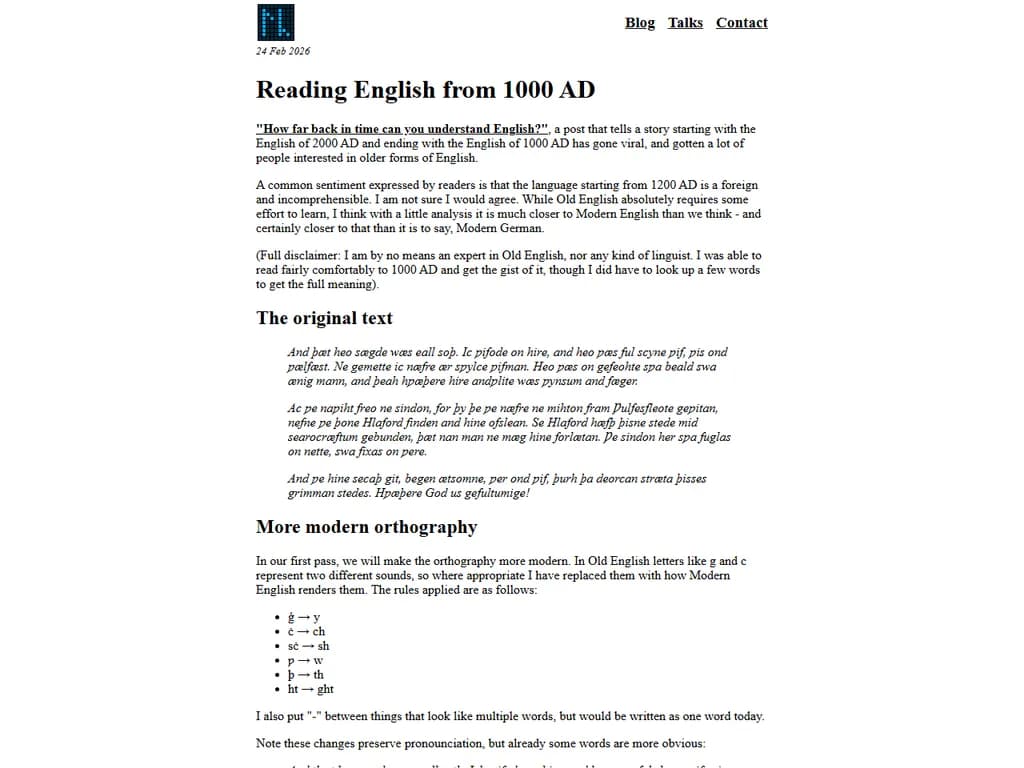
And þæt heo sægde wæs eall soþ.
Ic ƿifode on hire, and heo ƿæs ful scyne ƿif, ƿis ond ƿælfæst.
Ne gemette ic næfre ær sƿylce ƿifman.
Heo ƿæs on gefeohte sƿa beald swa ænig mann, and þeah hƿæþere hire andƿlite wæs ƿynsum and fæger.
Ac ƿe naƿiht freo ne sindon, for þy þe ƿe næfre ne mihton fram Ƿulfesfleote geƿitan, nefne ƿe þone Hlaford finden und hine ofslean.
Se Hlaford hæfþ þisne stede mid searocræftum gebunden, þæt nan man ne mæg hine forlætan. Ƿe sindon her sƿa fuglas on nette, swa fixas on ƿere.
And ƿe hine secaþ git, begen ætsomne, ƿer ond ƿif, þurh þa deorcan stræta þisses grimman stedes. Hƿæþere God us gefultumige!
近代正書法(モダン化)
And thæt heo sæyde wæs eall soth.
Ich wifode on her, and heo wæs ful shyne wif, wis ond wælfæst.
Ne yemette ich næfer ær swylche wifman.
Heo wæs on yefeoghte swa beald swa æniy mann, and theah hwæthere hire andwlite wæs wynsum and fæyer.
Ac we nawight freo ne sindon, for-thy-the we næfer ne mighton fram Wulfesfleote yewitan, nefne we thone Laford finden und hine ofslean.
Se Hlaford hæfth thisne stede mid searocræftum yebunden, thæt nan man ne mæy hine forlætan. We sindon her swa fuglas on nette, swa fixas on were.
And we hine sechath yit, beyen ætsomne, wer ond wif, through tha deorcan stræta thisses grimman stedes. Hwæthere God us yefultumige!
近代語への置き換え(第一段階)
| 古英語 | 現代英語 |
|---|---|
| heo | she |
| ich | I |
| swa | so |
| swylch- | such |
| -feoght- | fought |
| wifeman | woman |
| -slean | slain |
| fixas | fishes |
| wer | were (from werewolf) |
| were | weir |
And that she said was all sooth.
I wifed on her, and she was full shyne wife, wise and wælfast.
Ne yemeet I never ere suche woman.
She was on yefoughte so bold so any man, and theah hwæthere her andwlite was winesome and fair.
Ac we not free ne sindon, for-thy-the we never ne mighton from Wulfsfleet yewitan, nefne we thone Hlaford finden und hine ofslain.
Se Hlaford hath thisne stede mid searocraftum yebounden, that none ne may hine forletan. We sindon here so fuglas on nete, so fishes on weir.
And we hine seek yet, beyen at-samene, man and wife, through the darkan streeta thisses grimman stedes. Hwæthere God us yefultumige!
近代化のさらなる段階
And what she said was all true.
I married her, and she was a very shiny woman, wise and wælfast.
Ne yemeet I never before such a woman.
She was in yefoughte as bold as any man, and though hwæthere her andwlite was winesome and fair.
Ac we not free ne sindon, for-thy-the we never ne mighton from Wulfsfleet yewitan, neven we thone Hlaford finden und hine ofslain.
Se Hlaford has thisne stede mid searocraftum yebounden, that none ne may hine forletan. We sindon here like fuglas in a nete, like fishes in a weir.
And we hine seek yet, beyen at-samene, man and wife, through the darkan streeta thisses grimman stedes. Hwæthere God us yefultumige!
残された要素
-
hine:文脈から推測できるはず。
-
まだ不自然に見える語:
- shyne(現代の“sheen”と近い、ドイツ語との類似性も高い)
- 接頭辞 gė-(ye‑)
- 後綴 ‑en
- 動詞形 sindon
- 前置詞 mid
- fuglas(現代の“fowls”に近い、ドイツ語との類似性もある)
- stedes
-
本当に古英語特有なもの:
- ne は否定結合を知る必要がある。
- for‑þy‑þe はゼロから学ばないといけない。
- searo は後期の英語には残らず、死語にしか存在しない(トールキンはサルマンを借用した)。
- Hwæthere は現代英語の“whether”とは偽り友だが、“nevertheless”(それでも)を意味する。
- þone は文法的に理解しなければならない;単に “the” と言えば通じる。
- gefultumige:これを解読するのは大変だ!
古英語は本当にどれほど外国語なのでしょうか?
古英語は確かに独自の文法、語彙、慣用句を持つ別言語です。現在でもまだ表面だけしか触れていないと感じるほど深く掘り下げて学ぶ必要があります。しかし、それでも現代英語よりはるかに近く、現代ドイツ語よりもずっと近いという点では誤解が多いと言えるでしょう。
ご依頼いただければ、翻訳や解析を喜んで承ります。